No account needed
Use transcribe audio to text no sign up for a clean first pass
Transcribe audio to text no sign up when you need a quick working draft without registration screens. Bring a recording, let the speech become editable text, then review the parts that matter.
Choose your route
This entry point vs the general one
The no-account route is built for a quick handoff: less setup, a narrower decision path, and a clear next step when you only need usable text.
- transcribe audio to text free Use the broader free workflow when you want to compare access, output, and practical trade-offs.
- transcribe audio to text free online Choose the online-focused route when browser access and file handling are your main priorities.
- transcribe audio to text online Explore the general browser workflow when you want a wider overview of online transcription.
Three simple moves
The 3 things only it does
This route keeps the job intentionally small: provide the source, create a draft, and take the text with you for editing or sharing.
-
1
Bring a recording
Choose a clear audio file or describe the recording you want processed. A focused source makes the first transcript easier to review.
-
2
Create the text draft
The workflow turns spoken content into editable text, preserving the useful structure well enough for notes, summaries, or follow-up edits.
-
3
Review and continue
Scan names, numbers, and specialist terms, then copy the result into the document or workspace where the final version belongs.
From sound to copy
How to start
A raw recording is difficult to search and quote. A text draft gives you a practical surface for checking meaning, finding key moments, and shaping the final document.
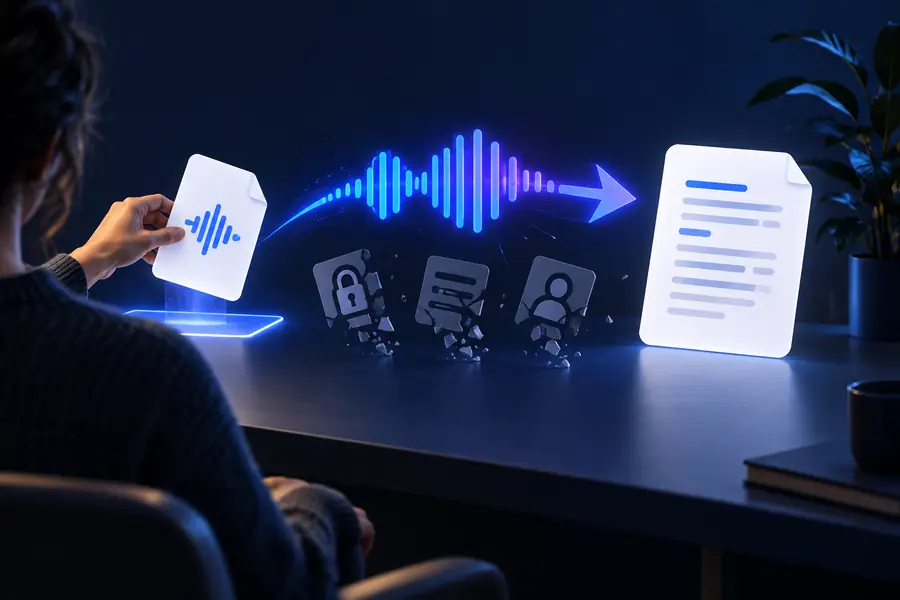
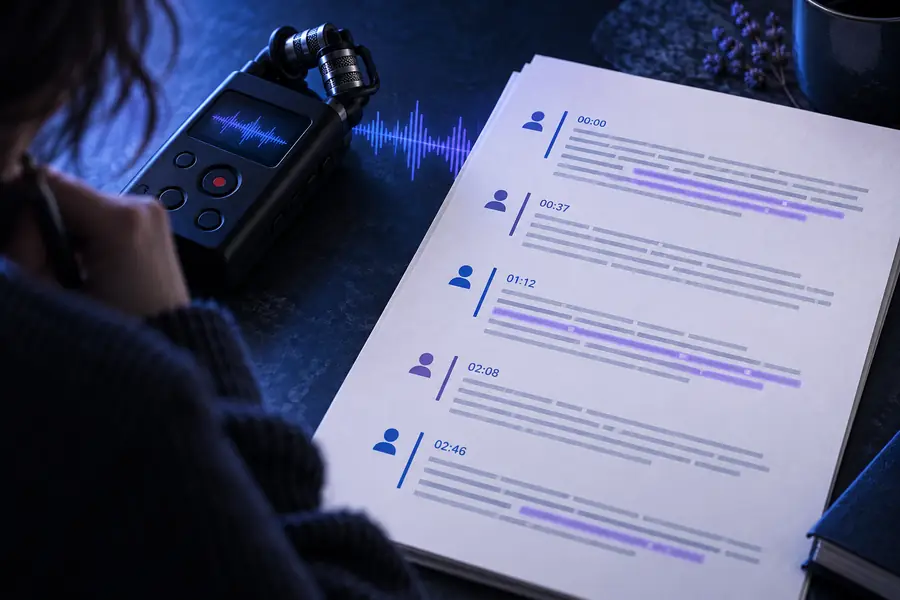
The draft is a starting point, not a substitute for checking names, figures, and unclear speech.
Before: recordingAfter: text draftAt a glance
The 3 things only it does
These concrete markers describe the intended path rather than promising a hidden account system or a complicated setup.
- No registration step in the entry path
- 0 accounts
- A focused source to begin the first draft
- 1 recording
- Bring audio, create text, review the result
- 3 moves
Set expectations
Limits
No-sign-up transcription is useful because it removes friction, not because it removes the need for judgment. The comparison below shows where this route fits best.
| No-sign-up route | General transcription route | |
|---|---|---|
| Account setup | Designed to begin without creating an account | May include a broader setup or workspace flow |
| Best use | A quick draft, short task, or one-off recording | Repeated work and a wider transcription routine |
| Starting point | Bring one recording and define the immediate task | Choose from a broader set of workflow options |
| Review responsibility | Check names, numbers, jargon, and unclear passages | The same review remains important after transcription |
| Output expectation | Usable editable text for the next step | Text that can fit into a larger ongoing process |
| When to switch | Move on when the draft answers the immediate need | Prefer it when continuity and repeat handling matter |
| Privacy decision | Avoid uploading material you are not authorized to process | Apply the same permission and sensitivity checks |
Make the next move
Start with the recording that matters
If you have a meeting note, interview, lecture, voice memo, or other spoken source waiting for cleanup, begin with the clearest version you have. The no-sign-up path helps you reach a readable draft without turning a small task into an account-management project.
- No registration-first workflow
- Useful for a quick editable draft
- Review sensitive details before sharing
Common questions
Its own FAQ
These answers focus on the no-account route and the practical questions that usually come before a first transcription.
Yes. This route is designed for starting a transcription task without creating an account first. You still need to provide an audio source and should review the resulting text for accuracy.
It means the initial workflow does not require you to register before trying the task. It does not mean every audio file is automatically suitable, private, or error-free.
It can provide a useful working draft for notes, interviews, meetings, and voice memos. Check names, numbers, overlapping speakers, accents, background noise, and specialist vocabulary before treating it as final copy.
Use the clearest recording available, with voices close to the microphone and limited background noise. If several people speak at once or the recording is very quiet, expect more manual corrections.
No-sign-up access does not remove your responsibility to protect confidential material. Only process recordings you are authorized to use, and consider the sensitivity of the content before sending it through any online workflow.