Researchers
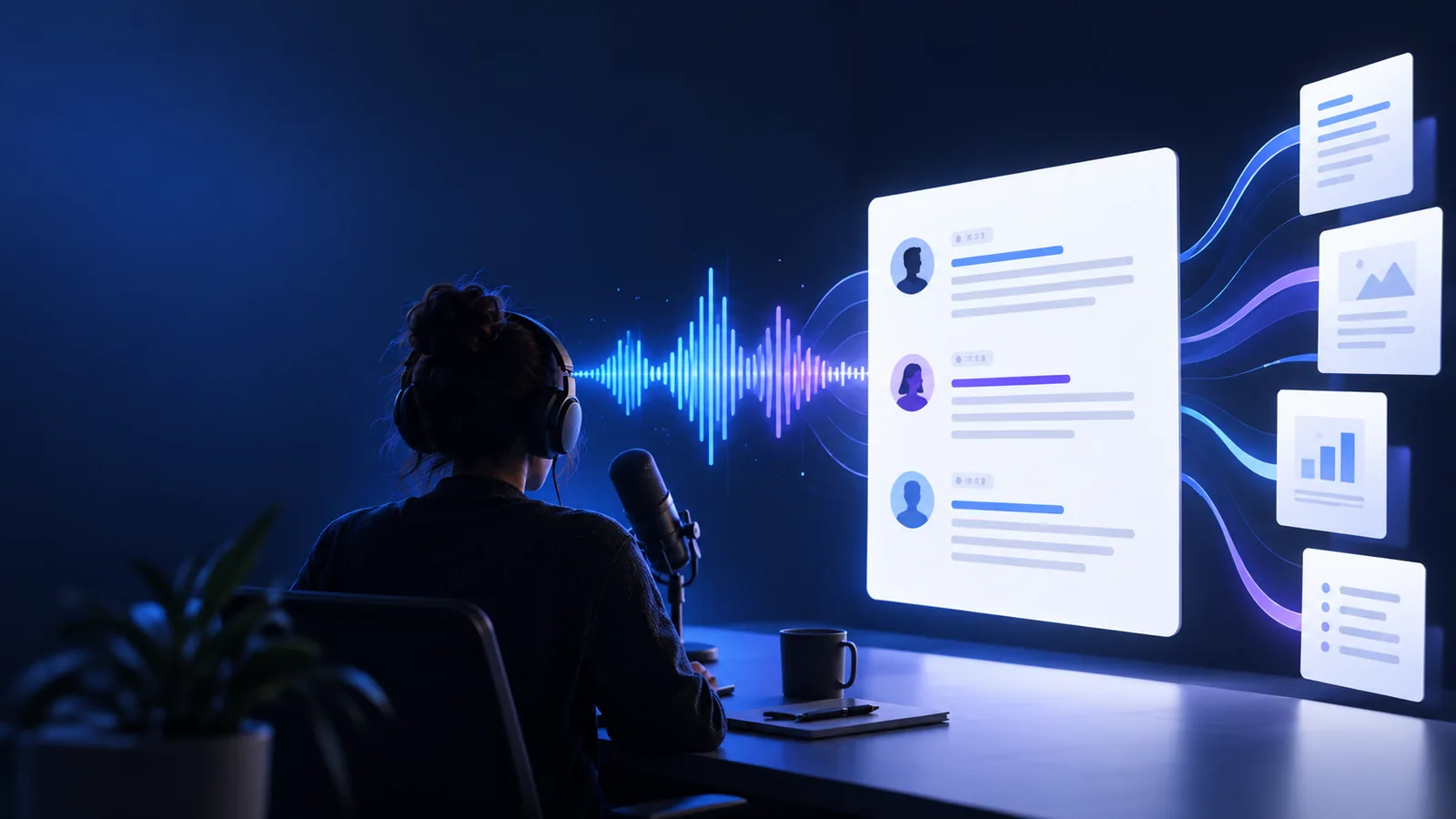
You have a long interview and need themes, notable quotes, and follow-up questions from the transcript.
One prompt can move from rough speech to a structured research brief. For a broader tool comparison, see transcribe audio to text ai.
Gemini workflow
Gemini can turn spoken recordings into a useful working draft when you give it clear instructions and enough context. This guide shows where that route fits, how to begin, and when a dedicated tool is the better choice.
Related routes
These related workflows help you compare Gemini with other ways to turn recordings, videos, and files into usable text.
Practical uses
Gemini is most useful when transcription is only the first step and you also want the text reshaped for a specific purpose.
You have a long interview and need themes, notable quotes, and follow-up questions from the transcript.
One prompt can move from rough speech to a structured research brief. For a broader tool comparison, see transcribe audio to text ai.
A lecture recording contains several topics that are difficult to review in chronological order.
Ask for headings, definitions, and a study outline after the spoken content is converted into text. When working in a browser, compare transcribe audio to text online.
A meeting recording includes decisions, owners, and unresolved questions mixed into casual conversation.
A focused instruction can separate decisions from discussion and produce an action list. The Google route offers another useful comparison at google transcribe audio to text.
A recorded conversation needs to become a clean article outline rather than a verbatim document.
Gemini can help reorganize the draft into sections, pull out repeated ideas, and flag passages that need checking.
Simple process
A good result comes from separating the transcription request from the editing request, then checking the source against the returned text.
Use a file you are allowed to process and give it a descriptive name. If the recording has several speakers, note their names or roles before you begin.
State the desired format, speaker-label preference, treatment of filler words, and whether timestamps or a summary are needed.
Listen to uncertain passages, correct names and numbers, and remove any sensitive details you do not want to retain in the final document.
Output preview
The important difference is not only the words captured. It is how clearly the result separates speakers, ideas, decisions, and follow-up work.
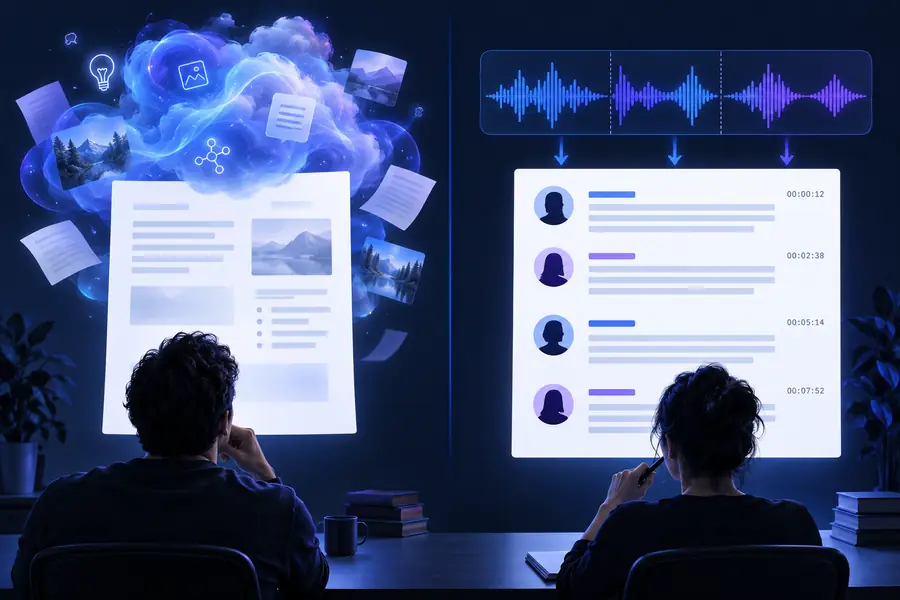
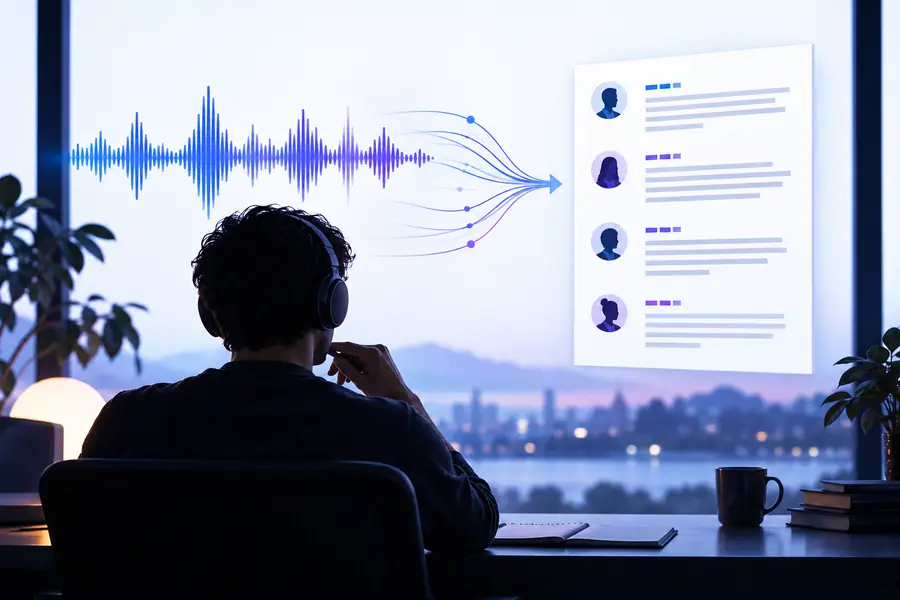
Always compare names, figures, and technical terms with the original audio.
Raw requestEdited resultKnow the boundaries
Gemini can be helpful, but it is not a substitute for careful listening, permission checks, or a purpose-built transcription pipeline.
Names, numbers, accents, overlapping voices, and specialist vocabulary can produce plausible but incorrect text.
What to do instead
Review every passage that affects a decision, quotation, invoice, or formal record.
A conversation with interruptions or similar voices may not receive reliable speaker labels.
What to do instead
Provide speaker context and verify the labels against the recording.
Uploading a recording to any hosted service can raise consent, retention, and confidentiality questions.
What to do instead
Remove unnecessary personal information, confirm permission, and use an approved private workflow when required.
You may not get the exact timestamping, export structure, or batch controls required by a professional production process.
What to do instead
Use a dedicated transcription or audio-to-text tool when repeatable file handling matters.
Route comparison
Gemini is a conversational entry point: useful when you want transcription followed by interpretation. A general transcription route is usually better when clean text and repeatable handling come first.
| Gemini entry point | General transcription tool | |
|---|---|---|
| Primary interaction | Conversation and written instructions | Upload, transcribe, then edit |
| Best starting request | A transcription plus a requested transformation | A clean transcript from an audio file |
| Follow-up work | Summaries, themes, action items, or outlines | Corrections, formatting, and export |
| Control over output | Controlled through natural-language prompts | Controlled through tool settings and templates |
| Review requirement | Check both the transcript and the generated interpretation | Check the transcript against the recording |
| Ideal use | One-off analysis of a meeting, interview, or lecture | Frequent or standardized transcription work |
Start with a focused instruction, give the audio enough context, and treat the first result as a draft to verify. Use the route that matches the amount of editing and control your work requires.
Common questions
Gemini can be used as a conversational route for working with supported audio inputs and requesting a written version. Results depend on the file, the interface, and the clarity of the recording, so review the output against the original.
Be specific about the desired transcript, speaker labels, timestamps, filler words, and final format. For example, ask for a speaker-labeled transcript followed by a short summary and a list of action items.
That is one of the main reasons to use a conversational workflow. After requesting the transcript, you can ask Gemini to organize it into themes, decisions, questions, a study guide, or another clearly defined format.
It can create a useful draft, but no automated transcript should be trusted blindly for legal, medical, financial, or published material. Check names, numbers, quotations, technical terms, and any passage that changes the meaning.
Choose Gemini when you want transcription combined with interpretation or rewriting. Choose a dedicated tool when repeatable uploads, specialized timestamps, batch processing, or tightly controlled exports are more important.