iPhone audio guide
How to transcribe audio recording to text on iphone? Step by step
How to transcribe audio recording to text on iphone? Start with a clean recording, send it through a transcription tool, then review names, punctuation, and speaker changes before sharing the finished text.
What this scenario must deliver
A reliable iPhone workflow separates capture, conversion, and review so the final text is useful rather than merely automatic.
-
1
Prepare the recording
Use the clearest available audio file, remove obvious silence when practical, and note names or specialist terms that may need correction later.
-
2
Convert audio to text
Upload or hand off the recording to a transcription tool, then choose the language and formatting that fit the conversation, lecture, or interview.
-
3
Review and use the transcript
Listen against uncertain passages, fix punctuation and names, label speakers, and copy the polished result into notes, documents, or your next workflow.
Each item in the handoff
The best route depends on where the recording lives and what you need to do with the resulting text.
- transcribe audio to text online Use a browser-based workflow when the recording is already on your iPhone and you want a straightforward upload path.
- transcribe audio recording to text Focus on the recording itself when you need practical guidance for turning interviews, meetings, or voice notes into text.
- transcribe audio to text android Compare the mobile workflow on Android when your audio is shared across different phones or operating systems.
Quality bar for an iPhone transcript
This comparison shows what changes when a recording becomes usable text. The transcript is the working document, but the original audio remains the reference for verification.
| iPhone recording | Text transcript | |
|---|---|---|
| Primary purpose | Preserves the original voice, timing, tone, and background context. | Makes spoken information searchable, scannable, and easier to edit. |
| Searchability | Requires listening and manual scrubbing through the file. | Supports keyword searches across the spoken content. |
| Speaker clarity | Voice identity is heard directly but may not be labelled. | Speaker labels can be added when voices and turn-taking are clear. |
| Names and jargon | Can be replayed to confirm exact wording. | May need manual correction for names, acronyms, and specialist terms. |
| Punctuation | Has natural pauses and emphasis instead of written punctuation. | Adds sentences and paragraphs that still require a human quality check. |
| Sharing | Needs a compatible audio player and enough listening time. | Can be pasted into notes, documents, briefs, or searchable archives. |
| Evidence | Remains the source to consult when the wording is uncertain. | Provides a convenient written working copy, not an infallible record. |
From captured audio to readable text
A useful result preserves meaning while removing the friction of replaying every sentence. Keep the audio nearby whenever accuracy matters.
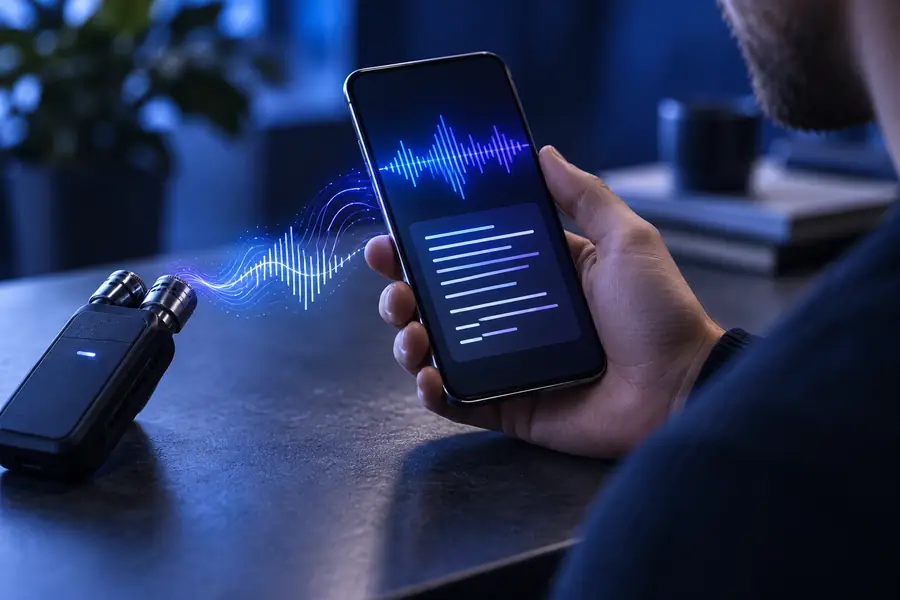
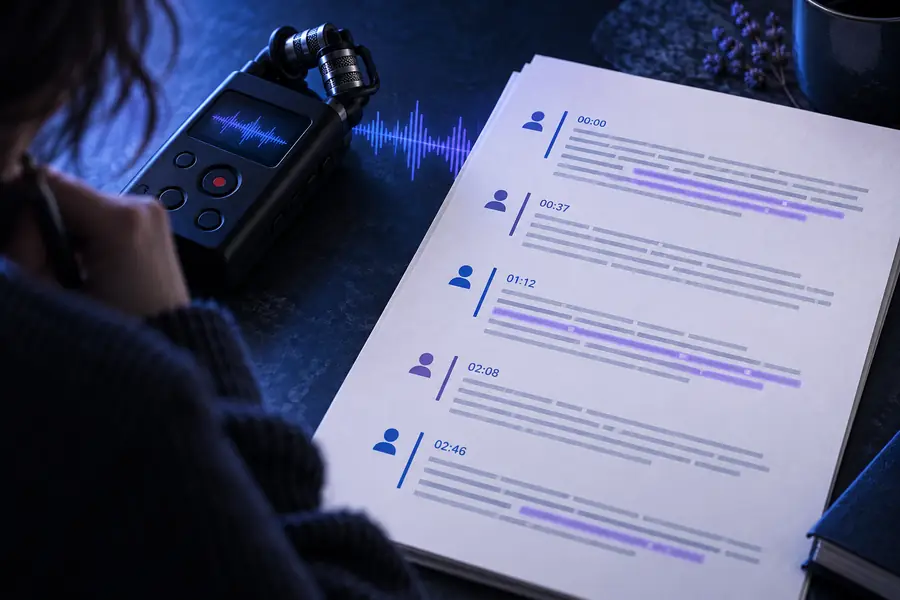
The written output should support the original recording, not replace careful review.
Before: audio recordingAfter: reviewed transcriptCommon rework
An iPhone can capture excellent source material, but no automatic transcription route removes every ambiguity. Plan a short editing pass for the issues below.
Noisy or distant speech
Room echo, traffic, overlapping voices, and a speaker far from the microphone can produce missing or incorrect words.
What to do instead
Use the cleanest recording available, replay uncertain sections, and mark unintelligible passages instead of guessing.
Names and specialist language
People, places, brands, medical terms, and acronyms are easy to misrecognize when they are uncommon or spoken quickly.
What to do instead
Keep a reference list nearby and search the transcript for likely errors before sharing it.
Overlapping speakers
When two people talk at once, even a strong tool may merge sentences or assign a passage to the wrong speaker.
What to do instead
Review the audio at a slower speed and add speaker labels only where the turn is genuinely clear.
Weak formatting
A raw transcript may contain long paragraphs, repeated fillers, or punctuation that does not match the intended document.
What to do instead
Separate speakers, add meaningful paragraph breaks, remove distracting filler, and preserve wording that affects meaning.
Turn your iPhone recording into usable text
Send the clearest recording you have, then use the transcript as a searchable draft for notes, interviews, meetings, or study. A brief review of names, speaker changes, and uncertain words will make the result much more dependable.
- Works from a real recording workflow
- Keeps review part of the process
- Useful for notes, interviews, and meetings
Scenario FAQ
Answers to the practical question behind this iPhone workflow, with accuracy checks included.
Record or locate the audio on your iPhone, then upload it to a transcription tool that accepts the file. After conversion, read along with the recording and correct names, punctuation, speaker labels, and unclear sections.
Yes. An existing Voice Memos or compatible audio file can usually be uploaded directly, so you do not need to play it aloud into another device. The available upload method depends on the tool and file location.
The simplest route is to share or upload the recording to an audio-to-text tool, wait for the draft transcript, and then review it. Short, clearly recorded speech generally needs less correction than noisy conversations or group discussions.
Accuracy depends on microphone quality, background noise, accents, language, terminology, and overlapping speech. Treat the result as a strong editable draft and verify important quotations, names, figures, and decisions against the original audio.
Yes. Edit the transcript for paragraph breaks, punctuation, speaker names, and terminology before copying it into notes or a document. Keeping the original recording lets you resolve any passage that the first draft handled poorly.